About
Meet me and learn about my approach to evidence-driven knowledge engineering.
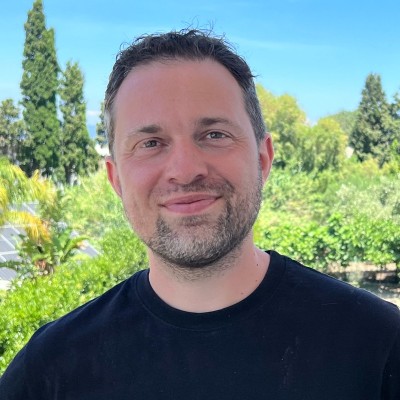
Nicolas Matentzoglu, PhD
I co-lead the OBO Foundry Technical Working Group, created and maintain the Ontology Development Kit (ODK) used by 120+ ontologies worldwide, and led the development of the SSSOM standard for sharing semantic mappings.
My work sits at the intersection of knowledge engineering, evidence modelling, and data curation. I believe that every claim in a knowledge system should trace back to evidence, and that expert understanding is what makes these systems trustworthy.
I am particularly interested in projects where evidence-driven workflows are central—where claims carry provenance, where domain experts grow their understanding of the problem, and where automation (including AI) helps scale the tedious parts of curation without replacing the judgment that makes results trustworthy. “Keeping humans in the loop” for me does not just mean they are “informed” and “accountable”—it means they are continuously trained and up-skilled on their own mental models to stay in control of their own knowledge.
Based in Athens, Greece, I work remotely with teams worldwide—from research institutions and non-profits to industry partners building next-generation data infrastructure.
Why This Work
I find ontology engineering interesting because it sits at the intersection of two things most people think are separate: technical systems and human understanding.
An ontology isn’t just a data structure. It’s a community’s attempt to say “this is what we mean when we say X” in a way that both humans and machines can use. Getting that right—especially when different communities have different mental models—is genuinely hard. And when you get it wrong, real consequences follow: papers that can’t be reproduced, databases that can’t be integrated, researchers talking past each other.
What I find most interesting are the problems that can’t be fully automated. Anyone can run a string-matching algorithm. The hard part is knowing when “asthma” in one database means the same thing as “asthma” in another—and when it doesn’t. That’s where domain expertise, clear thinking, and careful system design all have to work together.
Background
I started in ontology reasoning research at the University of Manchester (PhD, 2015), where I worked on OWL ontology modularity and co-organised the OWL Reasoner Evaluation competition — work that gave me a deep empirical understanding of how reasoning scales (and breaks) in practice. That foundation still shapes how I approach ontology design: every modelling decision has computational consequences. I then moved to the European Bioinformatics Institute where I worked on ontology infrastructure at scale. Since 2020 I’ve been an independent consultant, and my work has progressively shifted from building individual ontologies to building the standards and tooling that entire communities depend on.
Key roles and contributions:
- Co-lead of the OBO Foundry Technical Working Group, coordinating infrastructure across its 150+ registered biomedical ontologies
- Creator and maintainer of the Ontology Development Kit (ODK), adopted by 120+ ontologies worldwide
- Lead developer of the SSSOM mapping standard, now adopted across biomedical research, clinical data (OMOP), and industry
- Technical Lead across all Monarch Initiative ontology projects (HPO, Mondo, uPheno)
- As an external consultant, embedded with Every Cure’s data team (via University of North Carolina), where my main project was contributing to the design of the disease list for their MATRIX platform — the curated set of diseases that drives their drug repurposing candidate predictions. Also contributed to open-sourcing practices, KG integration consulting, normalisation, mapping, and quality validation
Education:
- PhD in Computer Science, University of Manchester (2011-2015)
- Diplom (equivalent to Master’s degree) in Media Informatics and Law, University of Cologne (2005-2010)
I’ve co-authored 30+ peer-reviewed publications and received the Excellence in Biocuration Award (2024) from the International Society for Biocuration.
Work Philosophy
Every Decision Documented
I work remotely with teams worldwide, which makes documentation non-negotiable. Every mapping carries its provenance. Every ontology change has an evidence trail. Clear communication, documented decisions, and asynchronous-friendly workflows ensure distributed teams stay aligned—and your system remains maintainable without me.
Experts Grow, Not Just Their Tools
I regularly teach hands-on semantic technologies to audiences from industry and academia. The goal is to make myself redundant—your team should be able to maintain and extend what we build together. Automation handles candidate generation and bulk validation, but the real aim is building your team’s understanding of their own domain, so they become more capable, not more dependent.
Evidence Before Architecture
Most work should be iterative and user-driven. I start with your actual questions and the evidence that matters, not a requirements document. I deliver incrementally, adjust based on feedback, and let the data model follow from what you need to know and what you can prove. No multi-month black boxes.
Open by Default
I’m a strong believer in the value of open ontologies and promote contributions from industry to open data efforts. The ODK, SSSOM, and OBO Academy all started as project-specific work that became community infrastructure. Where possible, I build things that give back—because the rising tide lifts all boats.
Let’s Work Together
If you’re looking for expertise in ontology development, knowledge graph construction, or FAIR data practices, get in touch. I’m always happy to discuss how semantic technologies might help your organization.